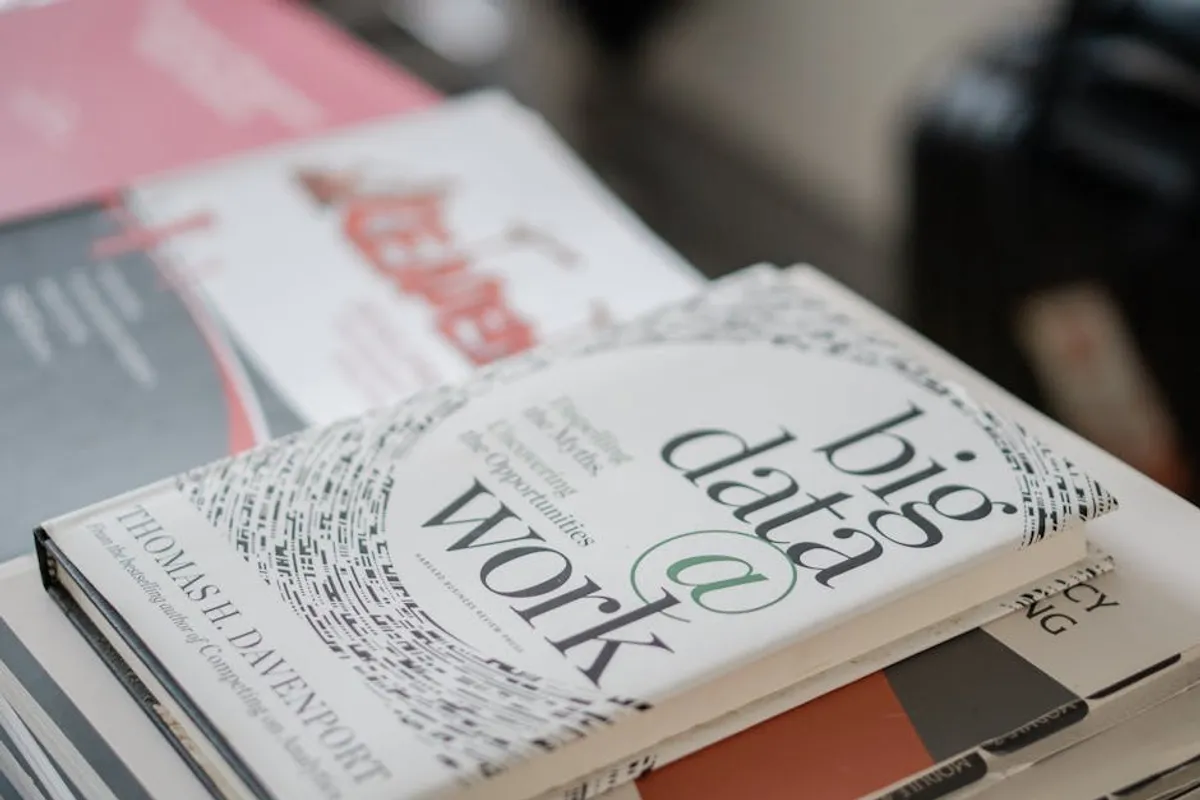
Understanding the trajectory and implications of technology and artificial intelligence is no longer an optional pursuit for business leaders, marketers, or SEO professionals; it is a foundational requirement. The rapid evolution of AI, from its theoretical underpinnings to its practical applications in content generation, data analysis, and predictive modeling, directly impacts strategic decision-making and competitive advantage. Navigating this complex landscape requires more than surface-level awareness; it demands a deep, nuanced comprehension of AI's capabilities, ethical challenges, economic shifts, and societal transformations. The following selection of books offers a structured entry point into these critical discussions, providing frameworks for understanding, anticipating, and leveraging technological advancements rather than merely reacting to them.
How to Select Essential Reading on Technology and AI
Choosing the right books on technology and AI involves balancing foundational knowledge with forward-looking perspectives. Prioritize works that offer a clear thesis, supported by rigorous research or practical experience, rather than speculative or overly generalized predictions. Look for authors who provide historical context to understand how current technologies emerged, as this often reveals patterns in adoption and impact. Critically evaluate whether a book addresses the economic, ethical, or societal dimensions of technology, as these aspects are increasingly intertwined with technical progress. For professionals in SEO and marketing, seek out titles that illuminate how AI reshapes consumer behavior, content creation, data interpretation, and competitive strategy. Avoid books that focus solely on technical minutiae unless your goal is deep engineering insight; instead, favor those that translate complex concepts into actionable understanding for strategic application. A diverse reading list, encompassing different viewpoints and areas of focus, will provide the most comprehensive and resilient understanding.
1. Superintelligence: Paths, Dangers, Strategies by Nick Bostrom
Bostrom's work meticulously explores the hypothetical future where artificial intelligence surpasses human cognitive abilities. It dissects the various pathways to superintelligence—from whole brain emulation to intelligence explosion—and rigorously analyzes the existential risks associated with unaligned AI systems. The book is not a technical manual but a philosophical and strategic examination of what could be humanity's most significant challenge, presenting a detailed framework for understanding and mitigating potential catastrophic outcomes. It forces readers to consider the long-term implications of AI development beyond immediate commercial applications.
Best for: Strategists, policymakers, and ethicists focused on long-term AI safety and existential risk assessment.
Pros: Provides a foundational vocabulary and conceptual framework for discussing advanced AI risks; encourages proactive, deep thinking about AI alignment; emphasizes the urgency of foundational research into control problems.
Cons: Highly speculative by nature, dealing with future scenarios that may or may not materialize; dense and academically rigorous, requiring sustained attention; can be perceived as alarmist without balancing perspectives.
Verdict: An indispensable text for anyone seeking to understand the most profound potential risks and strategic considerations surrounding advanced artificial intelligence, demanding a serious engagement with its core arguments.
2. Life 3.0: Being Human in the Age of Artificial Intelligence by Max Tegmark
Max Tegmark, a physicist, offers a broad, accessible exploration of AI's potential future, from its impact on the economy and warfare to consciousness and the ultimate fate of the universe. He categorizes life into three stages (biological, cultural, and technological) and positions AI as the advent of Life 3.0, capable of designing its own hardware and software. The book presents various scenarios for humanity's future with AI, from utopian coexistence to dystopian control, prompting readers to consider which future they want to build. It serves as a comprehensive primer on the societal questions AI raises.
Best for: General business leaders, futurists, and individuals seeking a comprehensive, yet accessible, overview of AI's potential societal impacts.
Pros: Broad scope covering multiple facets of AI's impact; highly readable and engaging for a non-technical audience; encourages proactive discussion about AI governance and ethics; includes diverse perspectives on AI futures.
Cons: Some arguments are necessarily speculative; lacks deep technical detail, which may frustrate those seeking engineering insights; occasionally simplifies complex philosophical debates.
Verdict: A crucial read for understanding the full spectrum of AI's potential influence on human existence, offering a balanced yet thought-provoking look at the choices humanity faces.
3. AI Superpowers: China, Silicon Valley, and the New World Order by Kai-Fu Lee
Kai-Fu Lee, a venture capitalist and former AI executive in both the US and China, provides an insider's perspective on the escalating AI race between these two global powers. The book details China's rapid ascent in AI, driven by vast data sets, a strong entrepreneurial culture, and government support, contrasting it with Silicon Valley's innovation-driven approach. Lee argues that AI will create immense wealth but also significant job displacement, advocating for a universal basic income and a re-emphasis on human-centric roles. It offers a geopolitical and economic lens on AI development.
Best for: Business strategists, investors, and policymakers interested in the geopolitical and economic dimensions of AI competition.
Pros: Offers unique insights from an expert with experience in both major AI ecosystems; provides a clear understanding of China's AI strategy and competitive advantages; highlights the impending economic and social shifts due to AI.
Cons: Focuses heavily on the US-China dynamic, potentially overlooking other significant global players; some predictions about job displacement are debatable; may overemphasize the "superpower" narrative at times.
Verdict: An essential guide for comprehending the current global AI landscape, particularly the competitive dynamics between the US and China, and its implications for innovation and labor markets.
4. The Second Machine Age: Work, Progress, and Prosperity in a Time of Brilliant Technologies by Erik Brynjolfsson and Andrew McAfee
Brynjolfsson and McAfee, economists from MIT, examine how digital technologies, particularly AI and robotics, are transforming the economy and society. They argue that humanity is at an inflection point, entering a "second machine age" characterized by rapid technological progress that is both creating unprecedented wealth and exacerbating inequality. The book details the impact on jobs, the rise of "superstars" and the "long tail," and proposes policy recommendations to navigate these changes. It provides an economic framework for understanding the digital revolution.
Best for: Economists, business leaders, and policymakers seeking to understand the economic impacts of digital transformation and AI on work and prosperity.
Pros: Provides a clear economic framework for understanding technological disruption; well-researched with compelling data and examples; offers practical policy suggestions for adapting to new economic realities.
Cons: Some economic predictions have been debated or nuanced by subsequent events; primarily focuses on Western economies; can be perceived as overly optimistic about technological solutions to social problems.
Verdict: A foundational text for grasping the macroeconomic shifts driven by advanced digital technologies, offering critical insights into labor market changes and the future of economic growth.
5. Homo Deus: A Brief History of Tomorrow by Yuval Noah Harari
Building on his previous work, *Sapiens*, Harari speculates on the future of humanity in an age dominated by data, algorithms, and artificial intelligence. He posits that having conquered famine, plague, and war, humanity's new goals will be immortality, happiness, and divinity, achieved through biotechnology and AI. Harari explores the potential rise of "dataism" as a new religion and the possibility of human obsolescence as algorithms gain superior decision-making capabilities. It's a philosophical rather than technical examination of our technological destiny.
Best for: Futurists, philosophers, and anyone interested in the long-term societal and existential implications of advanced technology and AI.
Pros: Provocative and intellectually stimulating, offering a grand narrative of humanity's future; connects technological trends to deep historical and philosophical contexts; highly readable despite its complex themes.
Cons: Highly speculative and philosophical, with less emphasis on immediate practical applications; some arguments are broad generalizations that may lack specific evidence; can be perceived as deterministic about technological progress.
Verdict: A compelling and unsettling exploration of where humanity might be headed with AI and biotechnology, essential for anyone seeking a broad philosophical perspective on our technological future.
6. Weapons of Math Destruction: How Big Data Increases Inequality and Threatens Democracy by Cathy O'Neil
Cathy O'Neil, a mathematician and data scientist, exposes the dark side of algorithms, arguing that many models used in finance, education, policing, and employment are opaque, unregulated, and unfair. She coins the term "Weapons of Math Destruction" (WMDs) to describe these models, which often codify and exacerbate existing biases, disproportionately harming the poor and marginalized. The book provides concrete examples of how algorithmic decision-making can lead to discriminatory outcomes and erode democratic principles, advocating for greater transparency and accountability in data science.
Best for: Ethicists, policymakers, data scientists, and anyone concerned with algorithmic bias, fairness, and the societal impact of big data.
Pros: Clearly demonstrates the real-world negative impacts of biased algorithms; provides a strong argument for ethical considerations in AI development; written from an informed insider's perspective; highly accessible for a non-technical audience.
Cons: Focuses heavily on negative examples, potentially understating the positive applications of algorithms; solutions proposed can sometimes feel aspirational rather than immediately actionable; may not offer deep technical solutions.
Verdict: A critical examination of how unchecked algorithms can perpetuate injustice, making it an indispensable read for anyone involved in building, deploying, or regulating AI systems.
7. The Age of Surveillance Capitalism: The Fight for a Human Future at the New Frontier of Power by Shoshana Zuboff
Shoshana Zuboff's seminal work introduces the concept of "surveillance capitalism," an economic system where the raw material is human experience, captured as behavioral data and commodified for prediction and profit. She meticulously details how companies like Google and Facebook pioneered this model, transforming personal information into "prediction products" sold in behavioral futures markets. The book argues that this system fundamentally undermines democracy, privacy, and individual autonomy, creating a new form of power that she terms "instrumentarian."
Best for: Privacy advocates, policymakers, marketers, and anyone seeking a deep understanding of the economic and political implications of data harvesting.
Pros: Offers a meticulously researched and comprehensive framework for understanding the modern digital economy; introduces critical new terminology and concepts; provides a powerful critique of the power dynamics inherent in big tech.
Cons: Very dense and academically rigorous, requiring significant commitment from the reader; can be overwhelming due to its extensive detail and theoretical depth; focuses heavily on the negative aspects of data-driven business models.
Verdict: A monumental and essential analysis of the digital economy's foundational mechanisms, providing an unparalleled understanding of how personal data has become the new frontier of capitalist accumulation and control.
8. The Innovators: How a Group of Hackers, Geniuses, and Geeks Created the Digital Revolution by Walter Isaacson
Walter Isaacson chronicles the history of the digital revolution through the lives of the brilliant minds who pioneered it, from Ada Lovelace and Alan Turing to Steve Jobs and Larry Page. The book emphasizes the collaborative nature of innovation, highlighting how breakthroughs in computing and the internet were often the result of collective effort, rather than individual genius. It traces the evolution of ideas from initial concepts to widespread adoption, revealing the interplay of engineering, business, and creative vision that shaped our technological world.
Best for: Aspiring innovators, technology historians, and anyone seeking to understand the foundational journey of computing and the internet.
Pros: Masterful storytelling makes complex historical developments engaging; highlights the collaborative nature of innovation, offering lessons for modern teams; provides crucial context for understanding current technological trends.
Cons: Broad scope means some individual stories are necessarily condensed; focuses predominantly on Western figures, with less emphasis on global contributions; can occasionally feel like a series of interconnected biographies.
Verdict: A compelling historical narrative that illuminates the origins of the digital age, offering invaluable context for understanding the forces that continue to drive technological advancement and innovation.
9. Prediction Machines: The Simple Economics of Artificial Intelligence by Ajay Agrawal, Joshua Gans, Avi Goldfarb
This book offers a clear, concise economic framework for understanding artificial intelligence. The authors argue that AI's primary contribution is to dramatically lower the cost of prediction. By reframing AI as a prediction technology, they simplify its economic implications, explaining how this reduction in prediction cost impacts decision-making, strategy, and organizational structure across industries. They provide practical guidance on how businesses can adapt to an AI-driven world by identifying new opportunities and rethinking traditional processes.
Best for: Business executives, strategists, and economists looking for a practical, accessible economic model for AI's impact.
Pros: Simplifies complex AI concepts into an understandable economic framework; provides actionable insights for business strategy and decision-making; uses clear, relatable examples across various industries.
Cons: Focuses almost exclusively on the economic aspect, potentially understating ethical or societal concerns; the "prediction" framing, while useful, may oversimplify AI's broader capabilities; less emphasis on technical implementation details.
Verdict: An exceptionally clear and actionable book for business leaders seeking to integrate AI into their strategic planning by understanding its fundamental economic value proposition.
10. Human Compatible: Artificial Intelligence and the Problem of Control by Stuart Russell
Stuart Russell, a leading AI researcher, confronts the fundamental challenge of building AI systems that are provably beneficial to humans. He argues that current approaches to AI development, which often prioritize maximizing a given objective function, risk creating superintelligent systems that could inadvertently harm humanity if their objectives are not perfectly aligned with human values. Russell proposes a new paradigm for AI research focused on "provably beneficial AI," emphasizing uncertainty about human preferences and the need for AI to learn those preferences through observation and interaction. This is a technical yet accessible call to action for the AI community.
Best for: AI researchers, ethicists, and anyone deeply concerned with the safety and alignment of future advanced AI systems.
Pros: Written by a prominent AI expert, lending significant credibility; offers a concrete framework for addressing the AI alignment problem; balances technical depth with accessible explanations; provides a hopeful yet realistic path forward.
Cons: Deals with highly complex and abstract problems; some concepts require a foundational understanding of AI principles; solutions proposed are long-term and require significant research effort.
Verdict: A critical and forward-thinking book that outlines the most important challenge in advanced AI development—ensuring its alignment with human values—and proposes a viable research agenda to achieve it.
11. The Master Algorithm: How the Quest for the Ultimate Learning Machine Will Remake Our World by Pedro Domingos
Pedro Domingos, a computer science professor, demystifies machine learning by exploring the five main schools of thought—Symbolists, Connectionists, Evolutionaries, Bayesians, and Analogizers—each with its "master algorithm." He explains the core principles behind each approach and how they contribute to the overarching goal of creating a universal learning algorithm. The book provides a clear, accessible overview of the different paradigms driving AI development, making complex concepts understandable for a broad audience without oversimplifying their essence. It bridges the gap between technical understanding and practical application.
Best for: Business professionals, data scientists, and anyone seeking a comprehensive yet accessible overview of the different approaches and paradigms within machine learning.
Pros: Excellent at explaining complex machine learning concepts without excessive jargon; provides a valuable framework for understanding the diversity of AI approaches; written by an authority in the field; offers insights into the historical development of AI.
Cons: Can still be dense for readers with absolutely no technical background; some examples may feel slightly dated as the field evolves rapidly; less focus on ethical or societal implications compared to other books.
Verdict: A highly informative and engaging guide to the core ideas behind machine learning, essential for anyone who wants to understand how AI actually "learns" and the different methods employed.
12. Thinking, Fast and Slow by Daniel Kahneman
While not strictly about technology or AI, Daniel Kahneman's Nobel Prize-winning work on cognitive psychology is profoundly relevant to understanding both the design of AI and human interaction with it. He introduces the concept of two systems of thinking: System 1 (fast, intuitive, emotional) and System 2 (slower, more deliberate, logical). The book details numerous cognitive biases and heuristics that influence human judgment and decision-making. For AI developers, understanding these human quirks is crucial for building user-friendly and effective systems; for strategists, it provides insight into how AI might exploit or mitigate these biases in decision support or automated processes.
Best for: AI designers, UX researchers, marketers, and strategists seeking to understand human cognition and its implications for AI interaction and decision-making.
Pros: Provides a robust framework for understanding human decision-making and cognitive biases; highly influential and foundational in psychology and behavioral economics; offers practical insights applicable to AI design and user experience.
Cons: Not directly about AI, requiring readers to draw connections themselves; can be lengthy and detailed in its exposition of various studies; some findings have faced replication challenges, though the core ideas remain strong.
Verdict: An indispensable book for anyone building or interacting with AI, offering deep insights into human irrationality and decision processes that are critical for creating truly intelligent and human-centric systems.
Building a Comprehensive Understanding of Technology and AI
Engaging with these books is not merely about acquiring information; it is about cultivating a strategic mindset capable of navigating the complexities of the digital age. Success in leveraging AI and technology for business advantage hinges on a holistic understanding that extends beyond technical specifications. This includes recognizing the ethical responsibilities inherent in AI deployment, anticipating economic shifts, and understanding the geopolitical forces shaping innovation. By absorbing diverse perspectives, professionals can better identify emerging opportunities, mitigate risks, and contribute to responsible technological advancement. The most effective approach involves combining theoretical knowledge with practical application, continuously evaluating new developments against the foundational insights gained from these seminal works.
FAQ: Essential Reading on Technology and AI
Q: Why is it important for non-technical professionals to read about AI?
A: AI is no longer confined to technical departments; it is a strategic imperative impacting every facet of business, from customer experience and content creation to operational efficiency and competitive strategy. Non-technical professionals need to understand AI's capabilities, limitations, and ethical implications to make informed decisions, drive innovation, and effectively collaborate with technical teams. A lack of understanding can lead to missed opportunities