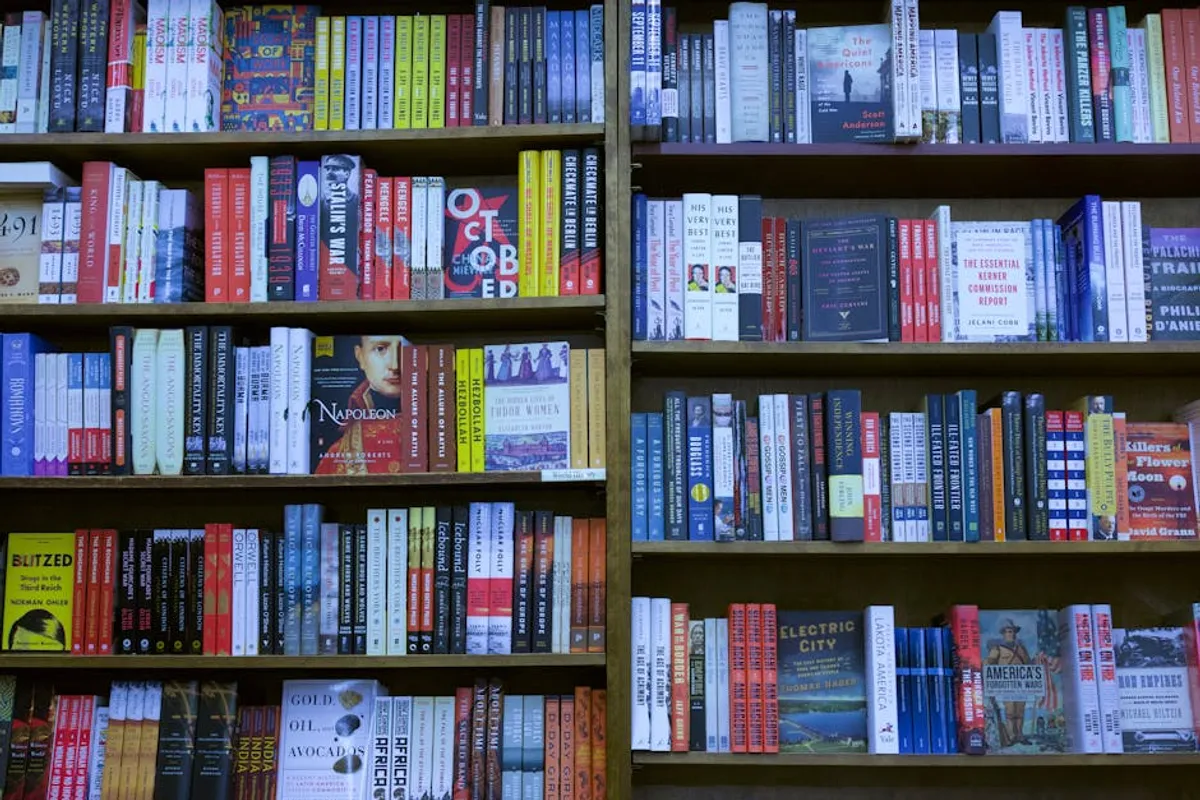
Selecting the right nonfiction books can significantly shape a student's academic trajectory and critical thinking skills. Beyond textbooks, these works offer diverse perspectives, foundational knowledge, and practical insights that complement formal education. The challenge lies in navigating the vast landscape of available titles to identify those that deliver genuine educational value and foster intellectual growth. This curated list focuses on books that excel in clarity, depth, and the ability to provoke thoughtful engagement, providing a robust foundation for students seeking to expand their understanding across various disciplines.
How to Select Impactful Nonfiction
When choosing nonfiction, students should prioritize works that align with their academic goals, stimulate intellectual curiosity, and offer practical applications. Look for authors who present complex ideas with clarity and evidence, rather than relying on unsupported claims. Consider the book's relevance to current global issues, its capacity to introduce new frameworks for understanding, and its potential to enhance specific skills like critical analysis or data interpretation. Prioritize books that encourage active reading and reflection, prompting you to question assumptions and synthesize information rather than passively absorb facts.
1. Sapiens: A Brief History of Humankind by Yuval Noah Harari
Harari's work provides a sweeping overview of human history, from the emergence of Homo sapiens to the present day, examining the cognitive, agricultural, and scientific revolutions that have shaped our species. It synthesizes insights from biology, anthropology, economics, and history to present a compelling narrative on how humans came to dominate the planet and create complex societies. The book challenges readers to reconsider fundamental assumptions about human nature, progress, and the future.
Best for: Students interested in macro-history, anthropology, sociology, and critical thinking about human civilization's trajectory. It provides a broad interdisciplinary framework.
Pros: Connects disparate fields into a coherent narrative; challenges conventional thinking on historical development; accessible prose makes complex ideas digestible for a broad audience; encourages interdisciplinary thought.
Cons: Some historical generalizations are debated by specialists; can be overwhelming for those seeking specific historical details rather than broad conceptual frameworks; occasional speculative conclusions.
Verdict: Offers a transformative lens on human history, encouraging interdisciplinary thought crucial for a holistic education. It serves as an excellent primer for understanding the forces that shaped modern society.
2. Thinking, Fast and Slow by Daniel Kahneman
Nobel laureate Daniel Kahneman explores the two systems that drive our thinking: System 1 (fast, intuitive, emotional) and System 2 (slower, more deliberate, logical). He reveals the profound impact of cognitive biases and heuristics on decision-making in personal, professional, and academic contexts. The book provides a rigorous yet accessible examination of human judgment, rationality, and the mechanisms behind our everyday choices.
Best for: Students of psychology, economics, business, and anyone seeking to improve their critical thinking and decision-making skills.
Pros: Provides a foundational understanding of cognitive psychology; explains complex concepts with clear examples; offers practical insights for improving decision-making and avoiding common biases; highly influential in multiple fields.
Cons: Can be dense in parts, requiring careful reading; some concepts may feel abstract without direct application; requires active engagement to fully grasp implications.
Verdict: Essential reading for understanding the intricacies of human thought and decision-making. It equips students with tools to critically evaluate their own judgments and those of others, a skill invaluable across all disciplines.
3. The Immortal Life of Henrietta Lacks by Rebecca Skloot
This narrative nonfiction work tells the story of Henrietta Lacks, whose cervical cancer cells were taken without her knowledge in 1951 and became the first immortal human cell line, HeLa. Skloot intertwines the scientific breakthroughs enabled by HeLa cells with the ethical dilemmas, racial inequalities, and personal story of the Lacks family. It explores themes of medical ethics, informed consent, scientific progress, and social justice.
Best for: Students in biology, ethics, journalism, sociology, and those interested in the intersection of science, race, and history.
Pros: Engages readers with a compelling human story; meticulously researched, blending scientific explanation with biographical detail; raises critical ethical questions about medical research and patient rights; serves as a model for narrative nonfiction.
Cons: Deals with sensitive themes that can be emotionally challenging; some scientific details may require basic biological understanding; the narrative structure can be complex with multiple timelines.
Verdict: A powerful and essential book that illuminates critical ethical issues in science and medicine through a deeply personal narrative. It fosters empathy and critical engagement with the societal implications of scientific advancement.
4. Educated by Tara Westover
Tara Westover's memoir recounts her journey from a childhood in a fundamentalist, survivalist family in rural Idaho, where she was denied formal education and medical care, to earning a PhD from Cambridge University. The book explores themes of family loyalty, self-invention, the transformative power of education, and the struggle to reconcile one's past with a burgeoning intellectual identity. It highlights the profound impact of knowledge on personal freedom and perspective.
Best for: Students interested in memoirs, sociology, the power of education, and narratives of resilience and self-discovery.
Pros: Engrossing and emotionally resonant narrative; provides a unique perspective on the value of education and intellectual curiosity; explores complex family dynamics and the challenge of breaking generational cycles; inspiring account of overcoming adversity.
Cons: Deals with themes of abuse and trauma that can be difficult for some readers; the specific circumstances of her upbringing are extreme and not universally relatable; some narrative details have been disputed by family members.
Verdict: A compelling testament to the transformative power of education and the human spirit's capacity for growth. It encourages students to reflect on their own educational journeys and the broader societal implications of access to knowledge.
5. Atomic Habits: An Easy & Proven Way to Build Good Habits & Break Bad Ones by James Clear
James Clear presents a practical framework for improving daily habits through small, incremental changes. He introduces the "Four Laws of Behavior Change" (Make it Obvious, Make it Attractive, Make it Easy, Make it Satisfying) and demonstrates how these principles can be applied to build positive routines and eliminate negative ones. The book emphasizes systems over goals, providing actionable strategies for continuous improvement.
Best for: Students seeking to improve productivity, time management, study habits, and personal effectiveness across all aspects of their lives.
Pros: Highly practical and actionable advice; clear, concise writing with compelling examples; focuses on sustainable, long-term change rather than quick fixes; applicable to academic, professional, and personal goals.
Cons: Some concepts may feel intuitive to those already familiar with habit formation literature; requires consistent effort to implement the strategies effectively; primarily focused on individual behavior change, less on systemic issues.
Verdict: An indispensable guide for students aiming to optimize their routines and achieve academic or personal goals. Its clear, evidence-based approach makes habit formation accessible and impactful.
6. Factfulness: Ten Reasons We're Wrong About the World – and Why Things Are Better Than You Think by Hans Rosling with Ola Rosling and Anna Rosling Rönnlund
Hans Rosling, a public health expert, challenges common misconceptions about the state of the world using data and statistics. He argues that people often hold an overly dramatic and negative view of global trends due to cognitive biases and outdated information. The book introduces ten instincts that distort our perception and offers a fact-based worldview, encouraging readers to rely on evidence rather than emotion when assessing global progress.
Best for: Students in social sciences, public health, economics, and anyone seeking to develop data literacy and a more accurate understanding of global issues.
Pros: Promotes critical thinking and data-driven analysis; debunks common myths about global development; offers a hopeful yet realistic perspective on human progress; encourages a nuanced understanding of complex issues.
Cons: Can be challenging to overcome deeply ingrained biases; some statistics may become outdated over time; primarily focuses on broad global trends, less on specific regional challenges.
Verdict: Crucial for developing a fact-based worldview and combating misinformation. It equips students with the tools to critically evaluate data and media narratives, fostering a more informed global perspective.
7. Cosmos by Carl Sagan
Carl Sagan's classic work explores the vastness and beauty of the universe, from the origins of life to the mysteries of distant galaxies. Combining scientific rigor with poetic prose, Sagan makes complex astronomical and biological concepts accessible to a general audience. The book inspires wonder and curiosity about the cosmos while emphasizing the scientific method and humanity's place within the universe.
Best for: Students interested in astronomy, physics, biology, and the history of science, as well as those seeking inspiration and a broader perspective on existence.
Pros: Inspires awe and intellectual curiosity; makes complex scientific concepts understandable; emphasizes the importance of scientific inquiry and critical thinking; timeless exploration of humanity's relationship with the universe.
Cons: Some scientific information has been updated since its original publication (though core concepts remain relevant); the narrative style might feel less contemporary to some readers; requires an openness to grand scientific narratives.
Verdict: A foundational text for fostering scientific literacy and a sense of wonder. It demonstrates how science can be both rigorous and profoundly beautiful, encouraging a lifelong pursuit of knowledge.
8. The Elements of Style by William Strunk Jr. and E.B. White
This concise guide to English usage and composition has been a staple for writers for generations. It offers fundamental principles of writing style, grammar, punctuation, and common errors to avoid. Strunk and White advocate for clear, concise, and vigorous prose, providing rules and examples that help students develop effective written communication skills.
Best for: All students, especially those in humanities, journalism, and any field requiring strong written communication, from essays to professional reports.
Pros: Extremely practical and actionable advice for improving writing; highly concise and easy to reference; emphasizes clarity, conciseness, and precision in language; foundational text for developing strong prose.
Cons: Some rules are prescriptive and occasionally debated by modern linguists; primarily focuses on traditional English prose, less on contemporary communication styles; requires consistent application to see significant improvement.
Verdict: An indispensable resource for any student aiming to master the craft of clear and effective writing. Its enduring principles remain vital for academic and professional success.
9. A People's History of the United States by Howard Zinn
Howard Zinn's seminal work offers a counter-narrative to traditional American history, focusing on the experiences of marginalized groups—Native Americans, enslaved people, laborers, women, and dissidents—rather than solely on presidents and generals. It challenges the heroic narratives often presented in textbooks, highlighting class struggle, social movements, and the impact of power structures on ordinary people. The book encourages a critical examination of historical sources and perspectives.
Best for: Students of history, political science, sociology, and anyone seeking a more comprehensive and critical understanding of American history.
Pros: Provides a vital alternative perspective to mainstream historical accounts; encourages critical analysis of power dynamics and social justice issues; meticulously researched with extensive primary source references; fosters empathy for marginalized groups.
Cons: Critiqued by some historians for its strong interpretive stance and selective focus; can be emotionally challenging due to its portrayal of injustice; may require supplementary reading to balance perspectives.
Verdict: Essential for developing a nuanced and critical understanding of American history. It challenges students to question dominant narratives and recognize the complexity of historical events and their impact on diverse populations.
10. Silent Spring by Rachel Carson
Published in 1962, Rachel Carson's groundbreaking book exposed the detrimental effects of pesticides, particularly DDT, on the environment and human health. Through meticulous scientific research and compelling prose, Carson documented how these chemicals moved through the food chain, causing widespread ecological damage. Her work is credited with launching the modern environmental movement and leading to significant policy changes, including the ban of DDT in the U.S.
Best for: Students in environmental science, public policy, biology, and those interested in the history of environmental activism and scientific advocacy.
Pros: A landmark work that catalyzed global environmental awareness; combines scientific rigor with accessible writing; demonstrates the power of scientific advocacy in influencing public policy; highlights the interconnectedness of ecosystems.
Cons: Some scientific details are specific to the mid-20th century, though the core principles of ecological impact remain relevant; the narrative can be dense with scientific terminology; may feel dated in its specific examples.
Verdict: A foundational text for understanding environmentalism and the critical role of science in public discourse. It provides a historical context for contemporary ecological challenges and the importance of responsible scientific practice.
11. Outliers: The Story of Success by Malcolm Gladwell
Malcolm Gladwell investigates the factors that contribute to exceptional success, arguing that it's often less about individual talent and more about hidden advantages, cultural legacies, and opportune circumstances. He explores concepts like the "10,000-hour rule," the impact of birth month on athletic success, and the role of cultural background in various achievements. The book encourages readers to look beyond simplistic explanations for success and consider broader societal and environmental influences.
Best for: Students in sociology, psychology, business, and anyone curious about the dynamics of success, talent, and opportunity.
Pros: Engaging and thought-provoking narrative style; uses compelling anecdotes to illustrate complex sociological and psychological concepts; challenges conventional wisdom about individual achievement; encourages a broader perspective on success factors.
Cons: Some arguments are simplified for narrative effect and have faced academic critique; may overemphasize external factors at the expense of individual agency; primarily focuses on Western examples of success.
Verdict: Offers a compelling sociological perspective on success, prompting students to critically examine the narratives of achievement. It provides valuable insights into the interplay of individual effort and environmental factors.
12. Guns, Germs, and Steel: The Fates of Human Societies by Jared Diamond
Jared Diamond's Pulitzer Prize-winning work explores the broad patterns of human history, attempting to answer why some civilizations developed advanced technologies and complex societies while others did not. He argues that geographical and environmental factors, rather than racial or cultural differences, were the primary drivers of societal development. The book synthesizes insights from geography, biology, anthropology, and history to present a grand theory of human progress.
Best for: Students in history, geography, anthropology, environmental studies, and anyone seeking a comprehensive understanding of long-term global development.
Pros: Presents a compelling, interdisciplinary explanation for historical inequalities; encourages a holistic understanding of human development; extensively researched and intellectually ambitious; challenges deterministic views of history.
Cons: Some arguments have been criticized for environmental determinism or oversimplification of complex historical processes; can be dense and requires sustained attention; primarily focuses on large-scale historical patterns, less on individual agency.
Verdict: A monumental work that provides a powerful framework for understanding global historical development. It encourages students to think critically about the environmental and geographical forces that shape societies.
Maximizing Learning from Nonfiction
To extract maximum value from nonfiction reading, students should engage actively with the material. This involves more than just reading words; it means questioning the author's arguments, identifying supporting evidence, and considering alternative perspectives. Taking notes, summarizing key concepts, and discussing the material with peers can solidify understanding. Evaluate how the book's insights connect to other subjects you are studying or to real-world issues. The goal is not merely to accumulate facts, but to integrate new knowledge into your existing framework of understanding, thereby enhancing your critical thinking and analytical capabilities.
Frequently Asked Questions
Q: How can I choose a nonfiction book that aligns with my major?
A: Look for books that delve into the foundational theories, historical context, or contemporary challenges within your field. Many university departments or professors offer recommended reading lists. Consider books that explore interdisciplinary connections relevant to your major, broadening your perspective.
Q: Is reading nonfiction truly beneficial for improving grades?
A: Yes, reading high-quality nonfiction can significantly improve grades. It enhances critical thinking, expands vocabulary, improves comprehension, and provides deeper context for course material. The ability to synthesize complex information and articulate well-reasoned arguments, often honed through nonfiction reading, directly translates to better essay writing and exam performance.
Q: How can I stay motivated to read dense nonfiction books?
A: Break the book into manageable sections, set realistic reading goals, and take regular breaks. Engage actively by highlighting, annotating, or summarizing chapters. Discussing the book with others or joining a reading group can also provide motivation and deeper insight. Focus on the questions the book addresses and how they relate to your interests.
Q: Should I prioritize classic nonfiction or contemporary works?
A: A balanced approach is often best. Classic works provide foundational knowledge and historical context, showcasing the evolution of ideas. Contemporary works offer current perspectives, address modern challenges, and often incorporate the latest research. Both contribute to a well-rounded understanding of a subject.
Q: What's the best way to retain information from nonfiction books?
A: Active learning strategies are key. This includes note-taking (summarizing in your own words, not just copying), creating mind maps, outlining chapters, and teaching the material to someone else. Regularly reviewing your notes and connecting new information to existing knowledge helps solidify retention.