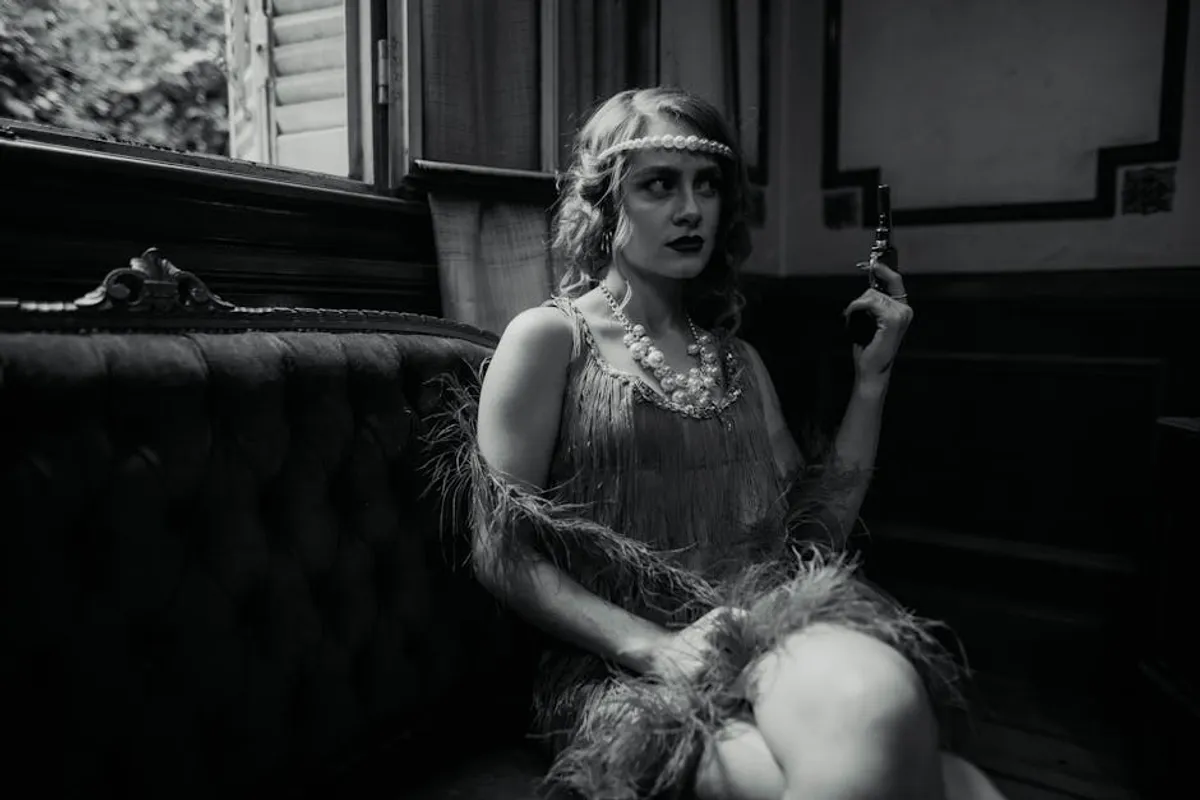
For educators, content strategists, and publishers developing resources for students studying F. Scott Fitzgerald’s The Great Gatsby, a precise, accessible breakdown of its central themes is essential. Moving beyond plot summaries, effective teaching and content creation demand a clear articulation of the novel’s deeper meanings. This approach not only aids student comprehension but also fosters critical thinking and analytical skills, enabling them to connect literary concepts to broader societal observations. Understanding how to present these complex ideas lucidly ensures that educational materials resonate and provide lasting value.
The Corrupted American Dream
One of the most prominent themes in The Great Gatsby is the distortion of the American Dream. Originally conceived as the pursuit of happiness through hard work and self-reliance, Fitzgerald depicts it as corrupted by materialism and a superficial focus on wealth. Gatsby embodies this perversion, believing that immense riches will grant him access to Daisy and the past he desires. His lavish parties and extravagant lifestyle are not ends in themselves, but tools to achieve an idealized, unattainable vision.
- Key elements for students:
- The shift from meritocracy to materialism as the driving force.
- The illusion that wealth can buy happiness, love, or a return to the past.
- The moral decay associated with the pursuit of superficial success.
- Gatsby’s ultimate failure despite achieving immense financial success.
Social Class, Old Money, and New Money
The novel sharply delineates the distinctions between "old money" and "new money," highlighting the rigid social hierarchy of the 1920s. The established aristocracy, represented by Tom and Daisy Buchanan, possesses an inherited sense of entitlement and an unshakeable social standing, despite their moral failings. "New money," like Gatsby, accumulates wealth rapidly but struggles to gain acceptance into this insular elite. This theme explores how social status is not solely dependent on wealth but also on lineage and perceived refinement.
For student analysis: Focus on how characters from different social strata interact, the prejudices they hold, and the inherent power dynamics at play. The Buchanans’ ability to retreat into their wealth after causing destruction contrasts sharply with Gatsby’s inability to transcend his origins, even with greater riches.
Illusion Versus Reality
Fitzgerald masterfully explores the chasm between illusion and reality. Gatsby constructs an elaborate persona and a fantastical past to escape his humble beginnings and impress Daisy. He lives in a perpetual state of longing for an idealized past that never truly existed. This theme extends to the characters' perceptions of each other and their own lives, often preferring comforting illusions to harsh truths.
Pro Tip for Educators: When guiding students through this theme, emphasize textual evidence showing Gatsby's fabricated identity, Daisy's idealized image in his mind, and the ultimate collapse of these illusions. Encourage students to identify moments where characters deliberately deceive themselves or others, and the consequences of these deceptions.
Love, Obsession, and the Unattainable Past
Gatsby's love for Daisy is central to the narrative, yet it quickly blurs into an all-consuming obsession. His desire is not for the present-day Daisy, but for the Daisy of five years prior, a symbol of a lost past and an unfulfilled dream. This theme examines the destructive nature of holding onto an idealized version of love and the past, rather than engaging with present realities. Daisy herself is portrayed as a complex figure, both a victim of her social environment and complicit in its moral compromises.
Consider for discussion: The difference between genuine love and nostalgic obsession. Explore whether Daisy is truly worthy of Gatsby's devotion, or if she represents a larger, unattainable ideal.
Moral Decay and Emptiness
Beneath the glittering surface of the Jazz Age lies a profound sense of moral decay and spiritual emptiness. The "Valley of Ashes," a desolate wasteland between West Egg and New York, symbolizes the moral and social decay resulting from unchecked industrialism and the relentless pursuit of wealth. The characters, particularly those from the "old money" class, often exhibit carelessness, dishonesty, and a lack of empathy. Their lives, despite their opulence, are marked by superficiality and a profound lack of purpose or genuine connection.
Student focus: Analyze how the characters’ actions, particularly those of Tom, Daisy, and Jordan Baker, reflect a moral vacuum. Discuss the symbolism of the Valley of Ashes and Dr. T.J. Eckleburg’s eyes as representations of a lost moral compass or a watchful, indifferent deity.
Guiding Student Analysis
For content creators and educators, presenting these themes requires more than just listing them. It involves providing frameworks for students to identify, analyze, and synthesize these ideas within the text. Encourage close reading, critical questioning, and the development of arguments supported by specific textual evidence. By focusing on the interplay of these themes, students can develop a nuanced understanding of Fitzgerald's critique of the American Dream and the social landscape of the 1920s.
Frequently Asked Questions
What is the main theme of The Great Gatsby?
While multiple themes interweave, the central theme often cited is the corruption of the American Dream, exemplified by Gatsby's pursuit of wealth and an idealized past.
Why is the American Dream theme important in the novel?
It highlights how the original ideals of hard work and self-reliance were overshadowed by materialism and superficiality, leading to moral decay and disillusionment in the 1920s.
How does Fitzgerald show the difference between old and new money?
He contrasts the inherited wealth and ingrained social superiority of characters like Tom and Daisy Buchanan with the newly acquired, ostentatious wealth of Jay Gatsby, showing how social acceptance was not solely based on riches.
What does the "Valley of Ashes" symbolize?
The Valley of Ashes represents the moral and social decay, poverty, and spiritual emptiness that lie beneath the glamour of the Jazz Age, serving as a stark contrast to the opulence of West Egg and East Egg.